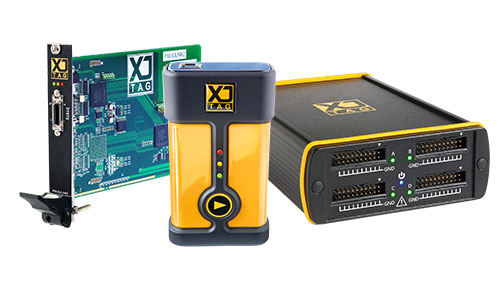
XJDeveloper – Test Development Environment
Create tests for your PCB assembly
XJDeveloper is an Integrated Development Environment for development and execution of circuit tests. Through its intuitive design flow, engineers have easy access to XJTAG’s market-leading test technology:
- Interconnection Test
- Functionality-based testing
- Large built-in library of device models with thousands of device types
- Easy test development for additional devices
- Advanced fault analysis and visualisation tools
- In-System Programming (including using XJFlash):
- JTAG devices (e.g. CPLDs and FPGAs)
- Non-JTAG devices (EEPROMs, flash memory)
XJDeveloper gives engineers easy access to the functionality defined in IEEE 1149 (JTAG), to bring the benefits of boundary scan testing to your product. Projects focus on the devices being tested and do not require understanding of JTAG, because XJTAG’s technology automatically creates the low-level test vectors behind the scenes. Test coverage can be viewed at any point of the circuit development process to assess project setup progress or investigate potential design improvements. When the project is complete, XJDeveloper can export projects to XJRunner for use on the production line.
XJDeveloper supports all of the capabilities of XJTAG’s product line-up, to give you full flexibility for all of your testing and programming requirements. XJDeveloper Plus includes all the modules listed below; XJDeveloper is provided with the XJRunner module, additional modules can be purchased separately.
Achieve more with your testing
No firmware required
Run tests and verify hardware before any application code is ready
Reduce time spent debugging
Fault Diagnostics is built-in as standard, as are layout and schematic viewers, to allow rapid identification of defect cause and location
Improve Time to Market and reduce project risk
Test coverage is calculated on the fly, so you can always see where improvement is needed. Early use of XJDeveloper can identify issues with a design (mis-connections, inaccessible signals etc).
Reduce Test development time
An easy-to-use UI and a large library of device models reduces the need to actually write tests.
Shared user interface
Tests run in development appear exactly as they will later for production operators
Smooth development process
Test reuse improves quality and allows collaboration from prototype debug to production test and between projects
Testing Connections
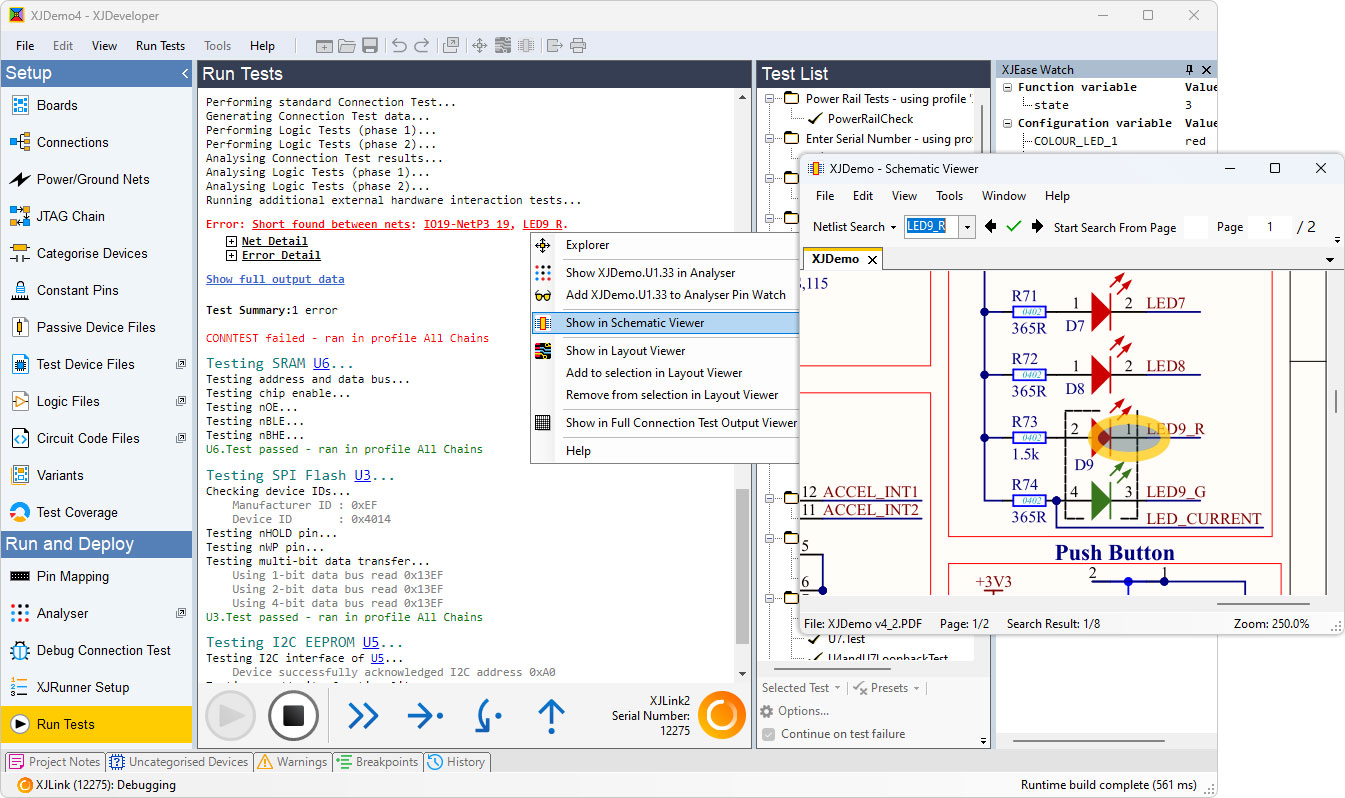
XJTAG’s Advanced Interconnection Test provides the core of the test coverage for your circuit. This allows you to test a higher percentage of a circuit than most other JTAG solutions, and is automatically generated from circuit data given during setup. Nets accessible through JTAG or other connections are checked for short- and open-circuit faults, including missing pull-up/pull-down resistors and resistive short-circuit errors. It also dynamically drives the logic devices in the circuit, giving test coverage to nets which are accessible only through logic devices.
XJEase Model Library
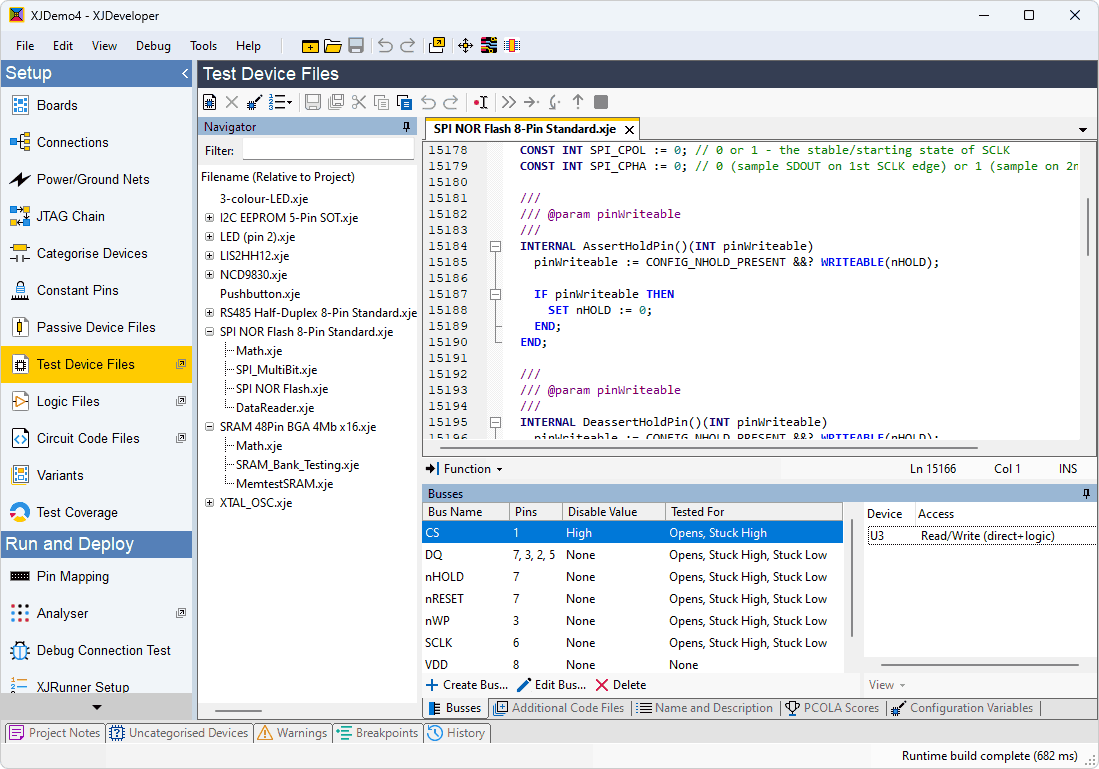
XJTAG checks the connectivity of non-JTAG devices by running tests against device models written in the XJEase language, normally from XJTAG’s built-in test library. These tests can respond to device behaviour and so can vary the tests performed based on the response to initial scans.
Device-Centric Tests
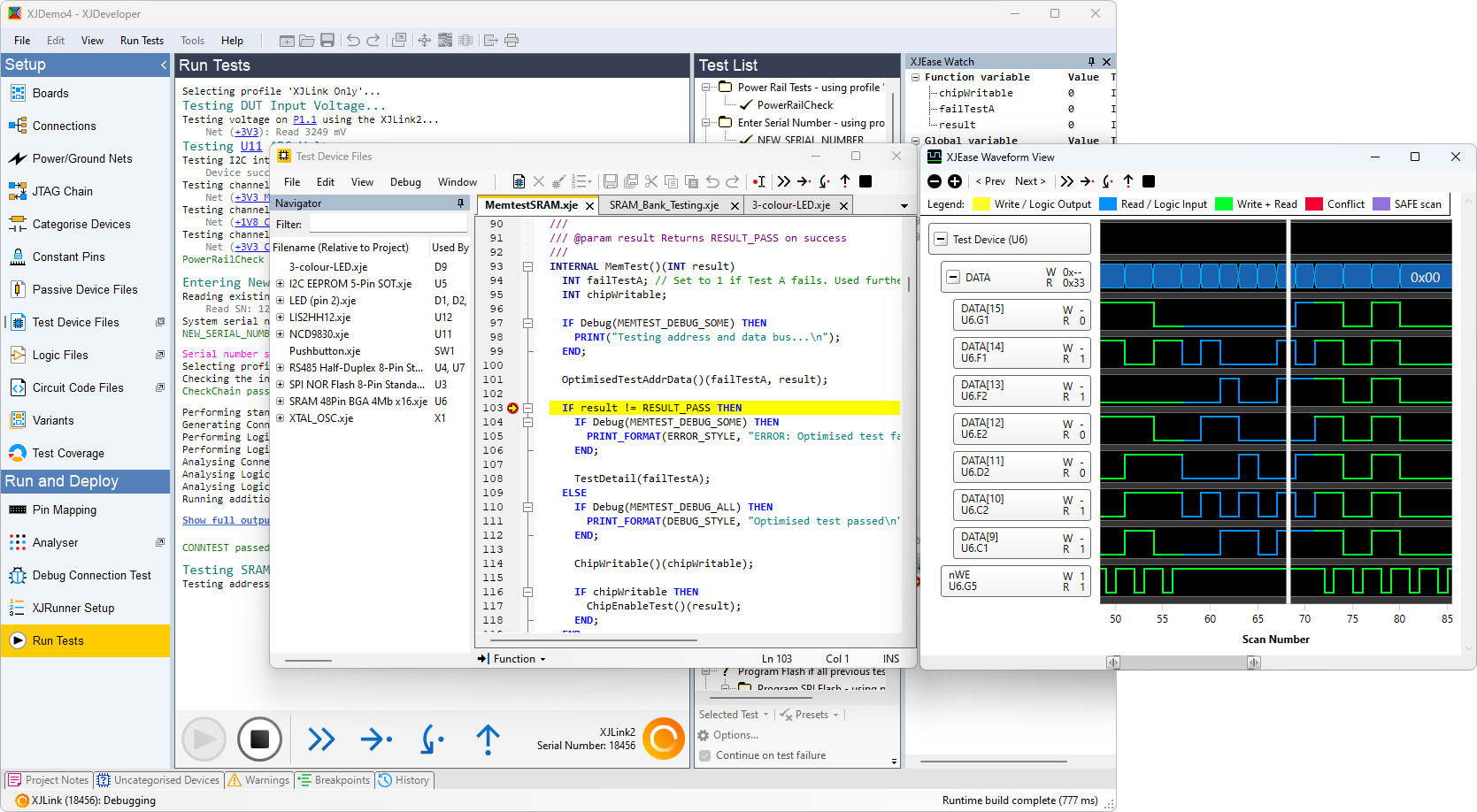
XJTAG’s library tests are device-centric – they are specific to the type of device being tested but not to the circuit they are placed in, or to the JTAG devices that are used to drive the nets on the PCB. Not only can tests easily be added to a project but they can be re-used in another project without modification wherever that type of device is used. Over time, this helps XJTAG to greatly reduce the engineering costs of test development.
XJDeveloper provides a full range of test debugging capabilities and gives you access to the source code for every test provided in the XJTAG library. It is therefore possible to see the tests in operation and adapt them as required for new devices.a
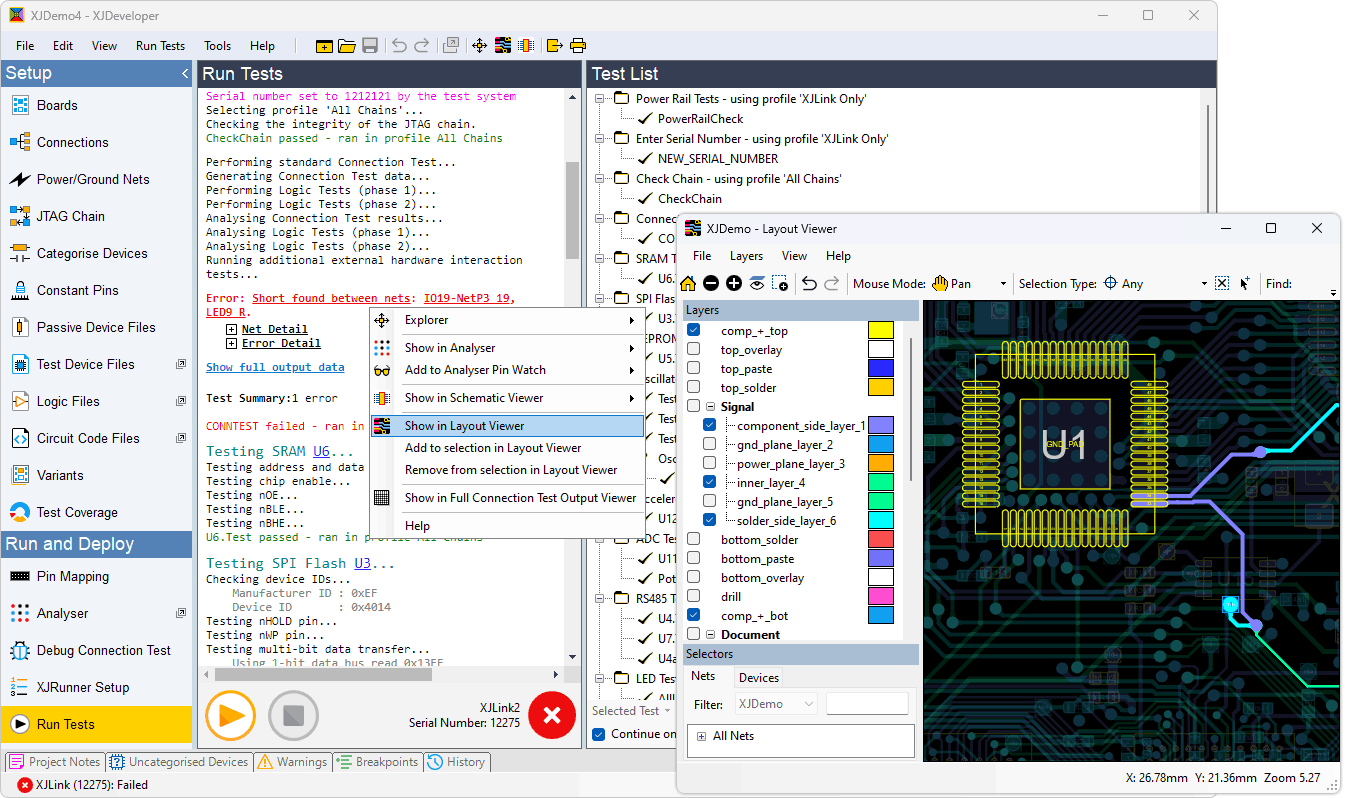
Fault Analysis
The main purpose of a JTAG-based test system is to detect faults in PCB assemblies, but the true value of this system is in its ability to accurately identify the cause of the faults.
XJDeveloper can find and identify a wide range of faults. Information about the faults can be combined with imported Netlist and Schematic diagrams to graphically show the nets exhibiting faults. Nets can be highlighted on both the Schematic Diagram and the PCB layout, using XJDeveloper’s viewer tools. The Schematic Viewer and Layout Viewer are also accessible in XJRunner, XJTAG’s production test environment, and XJInvestigator, the advanced fault diagnosis/rework station.
These powerful features, provided as standard, take fault analysis to a new level. Being able to see all of the points on a net where a short-circuit may have occurred due to a manufacturing defect, for example, can save valuable time in rework.
In-System Programming
In-System Programming (ISP) through a JTAG tool provides a simple way of configuring non-volatile memory during or after PCB assembly. XJDeveloper can be used to perform In-System Programming of flash and FPGA/CPLDs.
JTAG can be used to configure programmable devices of any size, by serially shifting address, data and control information through the JTAG chain to the relevant device. This is perfect for programming smaller amounts of data such as MAC addresses or serial numbers into an EEPROM, but far too slow for programming large images in a production environment. The answer to this is hardware-accelerated programming.
Accelerated Programming
XJTAG has used its expertise in JTAG to offer industry-leading solutions to the challenge of delivering faster hardware-accelerated programming over a boundary scan interface. This typically involves the temporary reconfiguration of an FPGA on a board as an ‘in-system programmer’, allowing XJTAG to program large non-volatile flash memories, with the speed often being limited only by the device being programmed. XJTAG calls this solution XJFlash. It has been shown to result in programming cycle times that are 50 times faster than just using boundary scan test and in some cases, the programming times are even faster than a manufacturer’s published figures.
XJTAG offers a range of acceleration options, including XJFlash for programming using FPGAs or CPLDs, and XJDirect, which programs using an on-board CPU or Microcontroller. Other applications may have more unusual requirements, and for such boards, XJTAG offers a consultancy service to develop bespoke solutions. Any programmable devices on a board can be used to deliver the desired results at high speed. Please contact us if you would like to know more.
Features
Advanced Interconnection Test
Tests a higher percentage of your circuit than most other JTAG solutions and provides high precision fault isolation. Learn more about Advanced Interconnection Test
Testing and programming non-JTAG devices
Non-JTAG devices connected to devices on the chain can be manipulated just as easily as those on the chain, for advanced testing – e.g. ethernet loopback. Learn more about non-JTAG devices
Flexible, high-level, test description language
The XJEase language is designed to simplify the process of test creation.
Device-centric approach
Device tests can be reused in different circuits without modification.
High-level conditional test execution
Determine whether to run tests based on board configuration, results of previous tests etc.
Built-in Test Library
XJEase device library contains models for tens of thousands of standard parts.
Revisions
Simple system to handle modified versions of circuits.
Dynamic Chains
Change JTAG chain configuration and frequency during testing.
Variants
Create multiple build variations on a single board design.
Layout Viewer
Layout Viewer to show the physical location of circuit elements and faulty nets. Learn more about Layout Viewer
Schematic Viewer
Schematic Viewer to show circuit functionality whilst developing or debugging tests. Learn more about Schematic Viewer
Waveform Viewer
View a graphical representation of waveforms in XJEase testing and in the Analyser screen. Learn more about Waveform Viewer
Open test implementations
Users can view the data driven during connection test, and view or edit code from the XJEase library.
XJEase software debugger
Step through XJEase code, set breakpoints and examine variable values to speed up your test development.
No need to understand JTAG
The XJTAG system works out how to drive the JTAG chains for you.
In-System Device Programming
Use SVF and STAPL files or XJEase scripts to program devices, or the Flash module to accelerate this. Learn more about In-System Device Programming
Export projects to XJRunner
XJRunner projects prevent modification of the tests for deployment to manufacture. Learn more about XJRunner
Test coverage analysis
Analyse and generate reports on the test coverage achieved on your circuit.
1149.6 support
Supports 1149.1 and 1149.6 devices
Modules
 XJRunner Module
Included with all XJDeveloper systems.
The XJRunner Module not only allows you to run tests in XJDeveloper using the same output system as XJRunner, but also allows you to launch the standalone XJRunner application, which is useful for checking that the XJPack file you have generated for production does exactly what you want.
Explore XJRunner XJAnalyser Module
Optional with XJDeveloper systems, included in XJDeveloper Plus.
The XJAnalyser module allows you to interact directly with the JTAG devices in your circuit, controlling and reading pins using the intuitive graphical interface. When troubleshooting, this is an easy way to prove connectivity, check the values read at pins, or monitor the circuit for unexpectedly changing signals. XJAnalyser can be found both as a screen in XJDeveloper and as a standalone application.
Explore XJAnalyser XJFlash Module
Optional with XJDeveloper systems, included in XJDeveloper Plus.
The XJFlash module allows use of XJTAG’s highly accelerated flash programming technology. If your circuit design has flash memory attached to an FPGA or CPLD, XJFlash uses the programmable device to boost programming speeds, often to a level where the flash device is the limit.
Explore XJFlash