Can You Test a Board Before the Firmware Exists?
 Simon Payne, CEO, XJTAG
|
October 28, 2026
Subscribe to LinkedIn newsletter
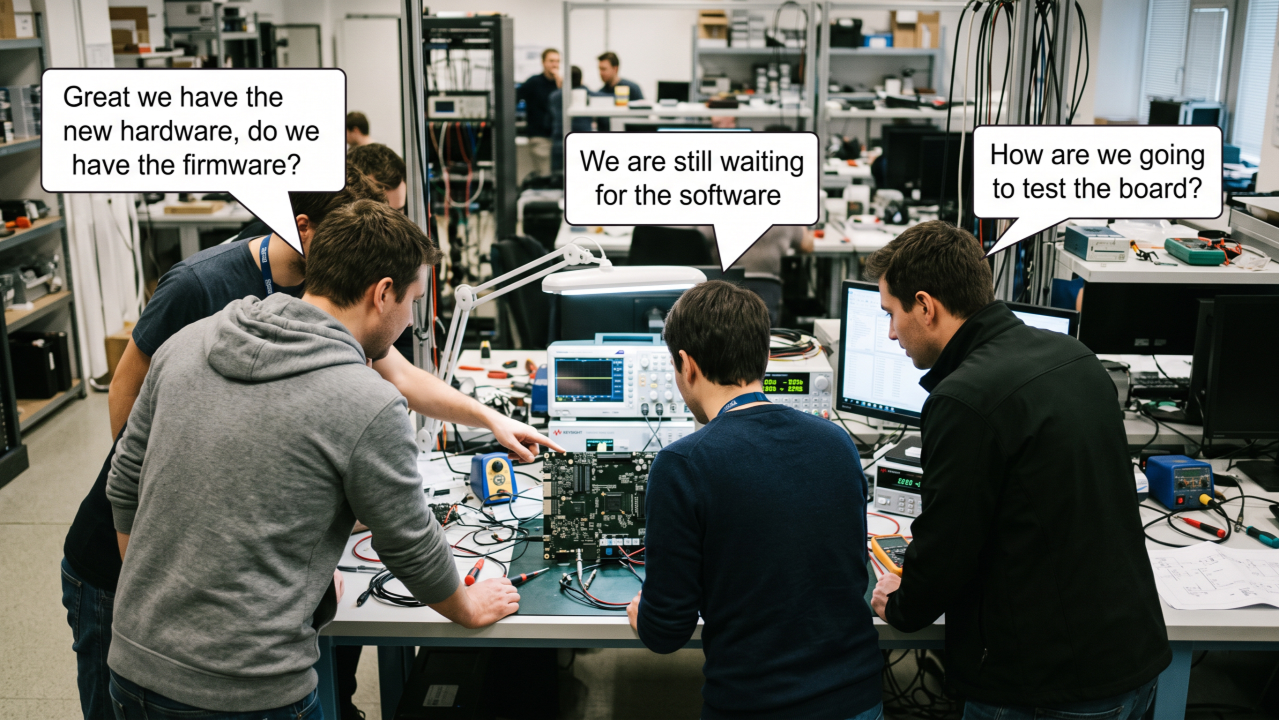
We were recently asked a very practical question:
“Can you test our board using Boundary Scan? The firmware isn’t available yet.”
The answer is yes, and this is exactly the kind of situation where Boundary Scan can provide real value.
When the first assembled PCBs arrive, hardware engineers want to start establishing confidence in them immediately. Waiting for firmware before meaningful hardware testing can begin creates an unnecessary dependency between two development activities that are often progressing in parallel.
The Hardware Often Arrives Before the Firmware
This is a familiar situation on many development projects.
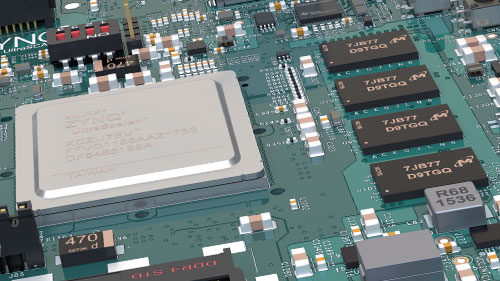
The first assembled PCBs arrive.
The hardware team wants to begin bring-up.
But perhaps:
- The processor firmware is still under development
- The FPGA image is not yet available
- Device drivers have not been written
- The operating system is not running
None of this necessarily indicates a problem with the project.
Hardware and software development simply progress at different rates.
The important question is whether hardware testing has to wait.
Boundary Scan Doesn’t Depend on Your Application
One of the key advantages of Boundary Scan is that the test capability is built into the semiconductor devices themselves.
It operates independently of the application software or FPGA design.
So the processor does not need to have booted and the FPGA does not need to be configured with the product design before useful structural testing can begin.
Boundary Scan can instead be used to gain access to PCB signals through the dedicated test logic already present in suitable devices.
That access can help engineers verify things such as:
- PCB interconnections
- Address, data and control buses
- Connections to memories
- Connections to peripherals
- Resets, enables and other control signals
- Accessible interfaces and discrete circuitry
The emphasis is primarily on establishing confidence in the connections between the devices and the PCB.
Those connections can also be used to exercise part of a non-JTAG device’s functionality, providing additional evidence that the surrounding circuitry is behaving correctly.
Why That Matters During Bring-Up
Suppose the firmware eventually arrives and a memory interface doesn’t work.
There are now several possibilities.
Is there a firmware problem?
Is the memory being initialised incorrectly?
Is the FPGA or processor configuration wrong?
Or is there a physical problem with one of the PCB connections?
If structural tests have already established confidence in the relevant hardware, one major area of uncertainty has already been reduced.
Instead of the hardware and firmware teams having to work out whose area contains the problem, they have independent evidence to help narrow the investigation.
That can make bring-up considerably more systematic.
Hardware and Firmware Can Progress in Parallel
This is perhaps the broader benefit.
Boundary Scan can help decouple initial hardware validation from firmware availability.
While the software team continues developing the application, the hardware team can begin verifying accessible areas of the PCB.
Then, when the firmware is ready, it starts from a stronger position.
Some of the underlying hardware has already been independently checked.
That does not remove the need for functional testing.
It means functional testing begins with greater confidence in the hardware underneath it.
It Helps the Firmware Team Too
Firmware engineers are often among the first people to expose hardware problems because their software begins exercising interfaces that may never previously have been used.
If a peripheral fails to respond, they can spend considerable time investigating code before discovering that the cause is actually a PCB connectivity problem, an incorrectly fitted component or another hardware issue.
Providing the firmware team with boards that have already passed useful structural tests gives them a much better starting point.
They can concentrate on developing and debugging the software without automatically becoming the first stage of hardware diagnosis.
Start Building Confidence Earlier
Functional testing usually needs enough of the system to be operational for the application to run.
Boundary Scan works differently.
It uses dedicated test logic within the semiconductor devices to provide access to the PCB independently of the application.
That means useful hardware testing can begin much earlier in the development process.
And when hardware and software teams are both working towards the same deadline, removing unnecessary dependencies between them can be extremely valuable.
Closing Thought
The question we were asked was:
“Can you test the board even though the firmware isn’t ready?”
Yes.
But perhaps the more useful question is:
“Why wait for firmware before starting to build confidence in the hardware?”
Hardware and firmware development often happen in parallel.
The test strategy can too.
Boundary Scan provides a way to start checking the PCB earlier, establish confidence in accessible areas of the hardware and reduce uncertainty before the application ever runs.
Board Design Tip of the Week
When planning a new design, ask what you could verify if no application software were available at all.
Can important resets and enables be controlled?
Can key interfaces and memory connections be accessed?
Can critical signals be driven and observed?
Is the JTAG chain readily accessible?
Thinking about those questions during the design stage can give the hardware team useful diagnostic capability from the moment the first assembled PCB arrives — rather than from the moment the firmware does.
Could boundary scan help you test your next design?
Discover how boundary scan can help you improve test coverage, diagnose faults faster and simplify board testing:
Find out how XJTAG can help you.
Discover more about your board design with the Free XJTAG Layout Viewer.
To get started find out how the Free XJTAG Layout Viewer can help you see on your board: