Find Out Why Development Boards Should Ship with Proven Boundary Scan Tests
 Simon Payne, CEO, XJTAG
|
Subscribe to LinkedIn newsletter

How Built-In Hardware Validation Accelerates Platform Adoption and Reduces Support Risk
Introduction
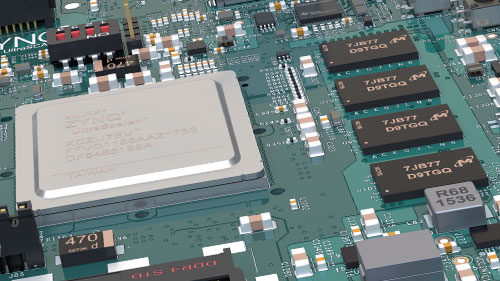
Most development boards do an excellent job of showcasing silicon capability. They demonstrate performance, features, and software enablement clearly and convincingly.
What far fewer development boards provide is confidence.
Once engineers move beyond initial evaluation and start building real hardware around a platform, a different set of questions emerges. At that point, performance matters less than trust — trust that the board is electrically sound, that interconnects are correct, and that failures can be diagnosed quickly and accurately.
This is where proven boundary scan tests change the role of a development board entirely.
The Challenge
When a development board ships without boundary scan tests, the customer inherits uncertainty.
- Are all device-to-device connections correct?
- Is a failure caused by hardware, software, or assembly?
- Can the board itself be trusted as a reference?
As CPUs, GPUs, FPGAs, and SoCs continue to increase in pin count and integration, these questions become harder to answer using functional testing alone. Dense BGAs, fine-pitch devices, and buried interconnects remove physical access just when engineers need visibility most.
Without a structural test method, every failure risks becoming a time-consuming investigation, and every uncertainty increases support load for the vendor.
The Turning Point
Providing validated boundary scan tests alongside a development board changes this dynamic immediately.
With proven tests in place, engineers can verify board integrity as soon as the hardware is powered and connected, often before any firmware is running.
Boundary scan tests enable:
- Immediate verification of board interconnects
- Deterministic fault isolation on non-booting systems
- Confident hardware validation without relying on software
- Clear separation of hardware issues from software issues
The development board stops being a black box and becomes a known-good reference.
Why It Works
Functional tests are designed to exercise behaviour, not to prove physical connectivity. On complex platforms, that distinction matters.
Relying solely on functional testing introduces two fundamental risks:
- Hidden connectivity faults – Cold solder joints, marginal opens, and partial connections can appear to function correctly under normal operation. These issues often surface later as intermittent failures, creating costly debug cycles and unnecessary silicon escalations.
- Poor diagnostic insight – When functional tests fail, they rarely indicate where the fault resides. Engineers are left guessing, probing, or writing additional tests—slowing progress and increasing frustration.
Boundary scan addresses these gaps by validating static connectivity directly, at low speed, before software or high-speed signalling can mask underlying issues.
Key advantages:
- Immediate hardware confidence for customers evaluating the platform
- Clear, repeatable diagnostics that identify what failed and where
- Reduced false silicon escalations and support tickets
- Reusable test assets that scale from development boards to customer designs
- Stronger platform credibility as a reference for correctness
Rather than replacing functional testing, boundary scan complements it, providing the structural foundation that makes higher-level validation reliable.
Results
Vendors that include proven boundary scan tests with their development boards will see a measurable shift in how their platforms are perceived and adopted.
In practice, including proven boundary scan tests with development boards leads to:
- Faster customer progress beyond initial evaluation
- Fewer support escalations driven by hardware uncertainty
- Reduced time spent diagnosing non-booting boards
- Higher confidence in reference designs and development platforms
- An accelerated transition from development board to prototype, & then into production
With validated test capability built in, a development board becomes more than an evaluation tool. It becomes a trusted reference for correctness.
Boundary scan moves into a default platform expectation, establishing a clear baseline for trust, validation, and adoption.
Take the Next Step
- See how advanced boundary-scan testing helps products reach market faster.
- Explore more than 100 real-world success stories. View 100+ case studies.
- Learn how proven hardware validation can reduce risk. Try advanced boundary-scan on your own board — free.
Related Reading