Skip to content
Testing Times
 Why AI Chip Vendors Must Rethink Test
Imagine this, AI chips power the next generation of high-speed, high-density systems, but your design and manufacturing customers can’t fully test them after assembly. Hours vanish as engineers run functional tests, probing for solder issues, only to miss faults that silently degrade performance over time.
This challenge is intensified by the use of BGA (Ball Grid Array) packages for AI chips. With solder joints and I/O pins hidden beneath the device, engineers can’t access them for visual inspection or probing. Once assembled, there’s simply no physical way to check whether every connection is sound, making structural test methods like boundary scan essential for uncovering hidden defects.
The Problem
Across the industry, many engineers supporting AI chip customers believe boundary scan isn’t being used for PCBA testing. They assume functional tests are enough to confirm solder quality and I/O connectivity, especially for high-speed interfaces and memory devices.
However, there are two major issues with this assumption:
Undetected faults: Functional tests can pass boards that actually have hidden faults. Cold solder joints, marginal opens, and partial connections can appear “good” at speed because of capacitance effects. These faults often worsen over time, leading to intermittent or early-life failures that are very expensive to diagnose and fix later.
Limited fault insight: When functional tests do detect that something’s wrong, they rarely reveal what the fault is or where it’s located without considerable extra development time. This makes fault isolation slow, reactive, and very costly!
The Misconception
Some engineers think boundary scan can’t detect cold solder or high-speed I/O problems, and as a result, BSDL (Boundary-Scan Description Language) support is being dropped from some new AI chip designs.
This belief is not only outdated but highly risky. That’s a dangerous oversight, especially as AI devices use dense BGA packaging. Because these devices have no exposed leads or probe points, boundary scan provides the quickest and most effective diagnostic tool for verifying connectivity beneath the package. Removing boundary scan support leaves customers without an easy, reliable way to detect and isolate faults that would otherwise remain hidden.
The Smarter Approach
Boundary scan operates at low speed, and that’s exactly why it works so well. By testing static interconnections and device pins, it reveals faults that high-speed functional tests often mask. It can detect:
Opens, shorts, and poor solder joints beneath BGAs.
Faults in high-speed signal paths that appear stable during functional tests.
Issues in signal distribution and memory interfaces that degrade over time.
Boundary scan isn’t a replacement for functional testing, it’s complementary. Together, they form part of a complete test strategy that improves yield, reliability, and customer satisfaction.
The Call to Action for AI Chip Vendors
For AI chip leaders like NVIDIA, AMD, ARM, and Intel, supporting boundary scan shouldn't be just a checkbox, it’s a commitment to reliability and customer success. Providing a full BSDL file enables customers to integrate AI devices into their board-level tests, improving product quality across the ecosystem.
Fully implementing boundary scan in AI devices ensures that engineers can:
Validate PCBA connectivity on the board or even between boards.
Help identify weak or marginal connections that could lead to intermittent faults.
Detect manufacturing defects earlier and at lower cost.
The Turning Point
In real-world prototyping and production, companies adopting full boundary-scan testing have cut debugging time from days to minutes, catching subtle connection faults invisible to functional testing. That’s the difference between reactive troubleshooting and proactive reliability.
What About You?
If you’re developing, producing and supporting AI chips, now is the time to rethink the test strategies you support. Boundary scan isn’t just a nice-to-have; it’s a necessity for you and your customers.
Explore over 100 real-world examples of how companies have transformed their fault isolation and testing using boundary scan technology: View case studies
Or experience it first-hand: Try XJTAG with your own board and see how fast, structured testing exposes the faults functional testing misses.
Turn Your Debugging Hours into Minutes of Insight
Picture this, you’re testing products after assembly, but fault-finding keeps tripping you up. Hours vanish as you and your colleagues chase hidden issues, only to find out too late which components are causing the problem.
The Problem
Functional tests that just say pass or fail won’t tell you why something failed. Faults hide under BGAs, debugging takes days, and engineers spend valuable time tracing signals instead of solving problems. In some cases it can take entire teams dozens of hours to isolate a single bad component, wasting valuable time and resources.
Tried and Failed
Typical fixes involve re-running functional tests, manual probing, or swapping components at random, yet the root cause often remains hidden. When faults occur on densely populated PCBAs or under BGAs where physical access is impossible, manual inspection turns into guesswork. Confidence fades, stress builds, and projects grind to a halt.
The Turning Point
The breakthrough comes with smarter testing, a structured way to diagnose faults down to the component level. Here’s what changes:
Your and your team can pinpoint exactly which component or connection has failed in minutes, not hours.
Shorts, opens, and missing pull-ups or pull-downs are identified automatically, even across logic paths.
Hidden faults under BGAs or in dense layouts become visible without complex fixtures.
Comprehensive coverage is achieved earlier, reducing costly rework later.
The Transformation
The impact is immediate:
Debugging that once took a team several days of work can now be done in less than an hour.
Faulty boards are detected early, preventing delays and unnecessary rebuilds.
Component-level visibility transforms testing into a proactive, cost-saving process.
Greater consistency and quality can then be delivered.
What about you?
If fault-finding and rework are still slowing your team down, it’s time to rethink your approach. It doesn’t just save time, it gives you clear visibility and confidence in every board.
Want to see the full story of how this transformation happens? Here’s how a developer and manufacturer of security and intelligence products reduced debugging from days to minutes. Read the case study
Or why not see it for yourself? Try XJTAG with your own board and explore how fast, structured testing can help you pinpoint faults and cut debugging and testing time.
Why Your Prototype Board Won’t Boot, and How to Fix It Faster
It’s the moment every engineer dreads: your new prototype arrives, you do some basic checks, power it on, and… nothing. No LEDs, no serial output, just silence. What went wrong? Is it a solder bridge, a missing pull-up, or a short hiding under a BGA? The clock’s ticking, and every hour lost brings you closer to a delayed project.
The Challenge
During bring-up, every second counts. You need to verify connections, check power rails, and confirm that devices are communicating properly, all before you can even begin functional testing. But traditional debugging methods, oscilloscopes, logic probes, and manual checks, only get you so far, especially on dense, multi-layer boards.
The Common Pitfalls
Many teams rely on trial-and-error to find faults, reflowing, resoldering, and swapping components in hope of a breakthrough. Others jump straight into firmware debugging before confirming hardware integrity. The result? Days or even weeks wasted chasing invisible faults that could have revealed in minutes.
The Smarter Approach
When traditional debugging hits a wall, there’s a better way to bring up and test your prototype boards. Instead of spending hours with probes and trial‑and‑error fixes, engineers can now use advanced testing tools to access hidden pins, automate testing, and pinpoint faults faster.
Achieve Superior Test Coverage
This technology allows engineers to achieve high test coverage by using device pins as virtual test points, no need for complex fixtures or physical access to hard‑to‑reach BGAs.
A built‑in library of tens of thousands of components covers connection and functionality tests, letting teams efficiently test a wide range of devices and quickly resolve manufacturing faults.
Test Complex, Integrated Boards
An integrated development environment (IDE) guides engineers through creating and executing PCB tests to find assembly faults and validate the function of components, from LEDs to DDR5 memory.
The intuitive interface makes component categorisation quick, with ready‑made device models or easy scripting options using the test language. Tests can be run on any board, no programming or boot code needed, to locate faults before power‑up.
Find the Root of Problems, Quickly
Advanced diagnostics provide full visibility of the board’s state. Engineers can instantly see the fault type, nets and pins involved, and their exact location on schematics, pinpointing shorts in seconds.
Without any custom tests, interconnection testing finds opens, shorts, missing pull‑ups/downs, and faults hidden through logic or resistors. When an issue is found, additional tests run automatically to provide more context.
Take Full Control of Your Testing
All this capability is accessible without coding. The tools are designed for ease of use, featuring an extensive library of ready‑to‑use device models that simplify setup and reduce onboarding time.
Tests can also be customised to interact with boards in real time, bringing up power rails in sequence or adapting tests dynamically based on hardware configuration.
The Turning Point
Teams using XJTAG’s bring-up approach have cut prototype debug time from days to hours. Instead of endless probing, they validate entire interconnects instantly and move straight to firmware testing with confidence. The result? Faster validation, fewer surprises, and more predictable schedules.
The Takeaway
Prototype bring-up doesn’t have to be stressful. With the right method, you can find faults faster, protect your design from costly damage, and get to that satisfying first boot in record time.
Explore It Now
Check out the test-coverage-report. It’s completely free, just upload your design data to instantly visualise test coverage, identify untested devices, and strengthen your validation plan.
Tip: Before you start, use the Device Checker to see if your device is supported for testing.
The Device Checker currently checks for:
JTAG devices, with a BSDL file
“Test” devices, covered by a file in the XJEase Library
“Logic” devices, covered by a definition in the Logic Library
For Test and Logic devices, XJTAG can further test the board for connectivity using the expected behaviour of the device.
Check out our page on Testing Non‑JTAG Devices
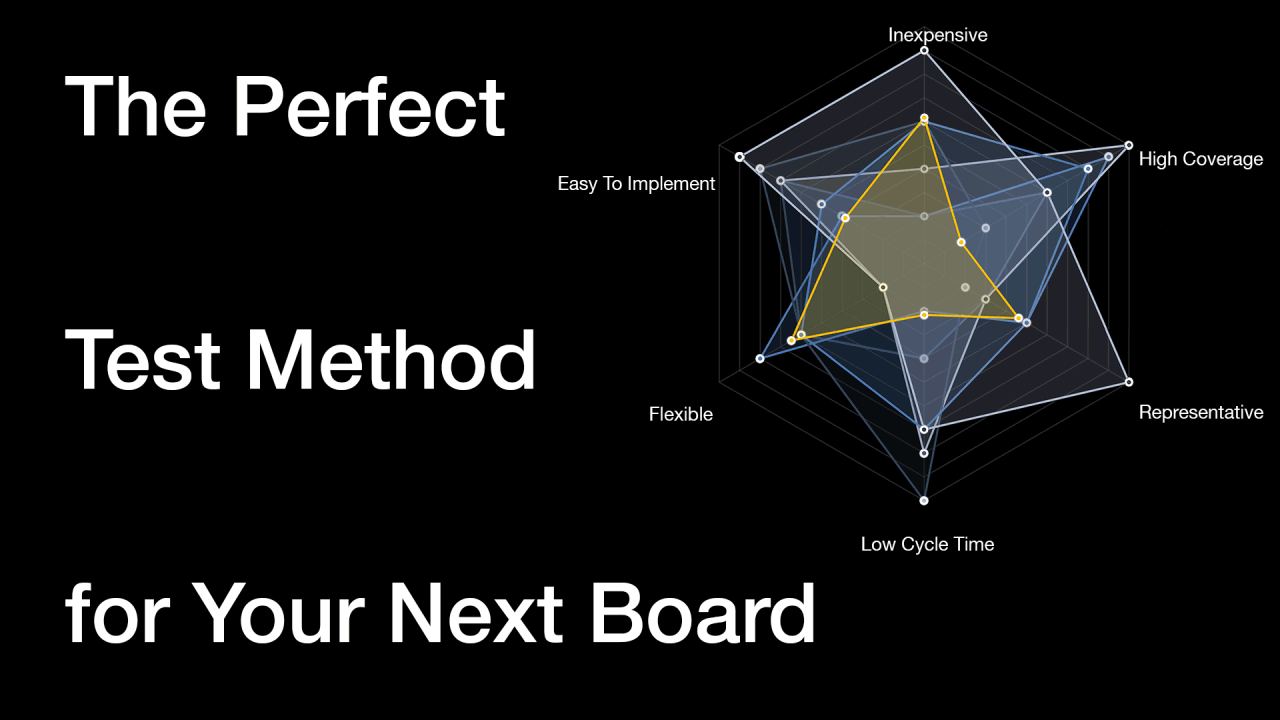 Choosing the Right Test Method Could Save, or Sink, Your Next Board
Every engineer faces the same challenge: when it comes to testing, which method is right for this board? Flying probe, bed-of-nails, boundary scan, JTAG, functional test, the list is long, the trade-offs are real, and the wrong choice can cost both time and confidence.
The Challenge
In early design and prototyping, speed and flexibility matter most. Later in production, consistency and coverage rule. Somewhere between the two, teams often struggle to decide: When do we move from manual checks to automated testing? What balance of cost, coverage, and speed makes sense for us?
Engineers juggle multiple priorities, limited budgets, tight deadlines, and increasing board complexity. Without a clear path, test strategy decisions can feel more like guesswork than engineering.
The Common Pitfalls
Too often, teams stick with what they’ve always done: continuity testers, manual probing, or costly ICT fixtures. The result? Gaps in coverage, undetected faults, and expensive rework down the line. Others over-compensate, investing heavily in systems that don’t fit their production volume or design stage.
Finding a Smarter Way
That’s where the Electronics Test Method Finder comes in. It helps engineers explore options across every test stage, from prototype debug to full-scale production, highlighting the pros, cons, and ideal use cases for each method.
Use it to:
Compare boundary scan, flying probe, functional, and ICT testing side-by-side.
Identify which method gives the right mix of speed, coverage, and cost for your stage.
Build a clear, scalable test plan that grows with your design.
The Turning Point
Imagine knowing exactly which approach fits your needs at every stage, no guesswork, no wasted investment. Teams using the tool gain faster validation, stronger coverage, and fewer redesigns. They make data-backed decisions instead of expensive assumptions.
The Takeaway
Choosing the right test method isn’t just a technical choice, it’s a business one. It affects every prototype, production run, and deadline. The right method saves weeks; the wrong one costs them.
Explore It Now
Take the guesswork out of your test strategy. Try the Electronics Test Method Finder, it’s completely free and doesn’t require any login, just click and explore to see how the right test approach can speed up development and boost reliability.
 Slow programming isn’t just a bottleneck, it could be holding back your whole business
Programming that crawls costs you time. Programming that flies saves time. Have you been struggling with programming times, is it slowing your development or production down? In the race to market, speed isn’t optional—it’s everything!
The Problem
Slow, inconsistent programming drags down both prototypes and production. Teams lose time waiting for large devices to load. Potentially leading to missed deadlines, projects off track, and delays in product launches.
The Turning Point
Two companies show how things can be different:
Active Siliconcut programming times dramatically, streamlining their test and production workflow.
Reason Tecnologia accelerated flash programming across devices, boosting reliability and speeding delivery.
Both turned to XJTAG to improve their programming times, gaining speed without losing quality.
The Transformation
Programming that once took ages now finishes in a fraction of the time.
Engineers get time back to focus on innovation, not waiting.
Production moves faster, with fewer bottlenecks and happier teams.
What about you?
If long programming times are eating into your schedules, it might be time to rethink how you handle it. The right tools don’t just save time, they save projects.
Discover more with real-world stories:
Active Silicon Case Study
Reason Tecnologia Case Study
And for deeper insight: Flash Programming Pack: In Focus Roundup
 Manual testing doesn’t just slow you down, it eats away at quality and confidence
Ever been there? You’re trying to keep production on track, but manual board testing keeps tripping you up. Mistakes slip through, results can’t be repeated, and suppliers send you boards you can’t fully trust. It feels like you’re always playing catch-up instead of moving forward.
The Problem
Is manual testing dragging the whole process down? Errors, rework, endless documentation, will all cost time, money, and peace of mind. Engineers become frustrated, and suppliers can’t give the level of reliability needed.
Tried and Failed
The obvious fixes? Double-checks, extra reviews, even more manual effort! But that just makes the process slower and doesn't solve the core issue. Confidence stays low. Stress levels stay high.
The Turning Point
A breakthrough can happen when manual checks become automated, structured testing. Here’s how it can change things:
Automated scripts replace repetitive human checks.
Test results become self-documenting and repeatable.
Suppliers can run packaged tests, without ever seeing sensitive design data.
Flexible tools help to improve test coverage across digital, analogue, and functional testing.
The Transformation
The difference can turn night into day:
No more guesswork, results that are clear, reliable and traceable.
Supplier boards arrive already tested and verified.
Development cycles speed up, giving engineers back their time.
A sense of confidence and calm replaces the constant firefighting.
What about you?
If manual testing is still slowing down your production, maybe it’s time to rethink how you approach it. Automation doesn’t just save time, it restores confidence across your whole process.
Want to see the full story on how this transformation can happened? Here’s how one leading OEM developer and manufacturer of medical equipment turned testing from a bottleneck into a competitive edge. Read the case study
Back to top
We noticed you're visiting from United Kingdom (UK). We've updated our prices to Pound sterling for your shopping convenience. Use United States (US) dollar instead. Dismiss

 Why AI Chip Vendors Must Rethink Test
Imagine this, AI chips power the next generation of high-speed, high-density systems, but your design and manufacturing customers can’t fully test them after assembly. Hours vanish as engineers run functional tests, probing for solder issues, only to miss faults that silently degrade performance over time.
This challenge is intensified by the use of BGA (Ball Grid Array) packages for AI chips. With solder joints and I/O pins hidden beneath the device, engineers can’t access them for visual inspection or probing. Once assembled, there’s simply no physical way to check whether every connection is sound, making structural test methods like boundary scan essential for uncovering hidden defects.
The Problem
Across the industry, many engineers supporting AI chip customers believe boundary scan isn’t being used for PCBA testing. They assume functional tests are enough to confirm solder quality and I/O connectivity, especially for high-speed interfaces and memory devices.
However, there are two major issues with this assumption:
Undetected faults: Functional tests can pass boards that actually have hidden faults. Cold solder joints, marginal opens, and partial connections can appear “good” at speed because of capacitance effects. These faults often worsen over time, leading to intermittent or early-life failures that are very expensive to diagnose and fix later.
Limited fault insight: When functional tests do detect that something’s wrong, they rarely reveal what the fault is or where it’s located without considerable extra development time. This makes fault isolation slow, reactive, and very costly!
The Misconception
Some engineers think boundary scan can’t detect cold solder or high-speed I/O problems, and as a result, BSDL (Boundary-Scan Description Language) support is being dropped from some new AI chip designs.
This belief is not only outdated but highly risky. That’s a dangerous oversight, especially as AI devices use dense BGA packaging. Because these devices have no exposed leads or probe points, boundary scan provides the quickest and most effective diagnostic tool for verifying connectivity beneath the package. Removing boundary scan support leaves customers without an easy, reliable way to detect and isolate faults that would otherwise remain hidden.
The Smarter Approach
Boundary scan operates at low speed, and that’s exactly why it works so well. By testing static interconnections and device pins, it reveals faults that high-speed functional tests often mask. It can detect:
Opens, shorts, and poor solder joints beneath BGAs.
Faults in high-speed signal paths that appear stable during functional tests.
Issues in signal distribution and memory interfaces that degrade over time.
Boundary scan isn’t a replacement for functional testing, it’s complementary. Together, they form part of a complete test strategy that improves yield, reliability, and customer satisfaction.
The Call to Action for AI Chip Vendors
For AI chip leaders like NVIDIA, AMD, ARM, and Intel, supporting boundary scan shouldn't be just a checkbox, it’s a commitment to reliability and customer success. Providing a full BSDL file enables customers to integrate AI devices into their board-level tests, improving product quality across the ecosystem.
Fully implementing boundary scan in AI devices ensures that engineers can:
Validate PCBA connectivity on the board or even between boards.
Help identify weak or marginal connections that could lead to intermittent faults.
Detect manufacturing defects earlier and at lower cost.
The Turning Point
In real-world prototyping and production, companies adopting full boundary-scan testing have cut debugging time from days to minutes, catching subtle connection faults invisible to functional testing. That’s the difference between reactive troubleshooting and proactive reliability.
What About You?
If you’re developing, producing and supporting AI chips, now is the time to rethink the test strategies you support. Boundary scan isn’t just a nice-to-have; it’s a necessity for you and your customers.
Explore over 100 real-world examples of how companies have transformed their fault isolation and testing using boundary scan technology: View case studies
Or experience it first-hand: Try XJTAG with your own board and see how fast, structured testing exposes the faults functional testing misses.
 Turn Your Debugging Hours into Minutes of Insight
Picture this, you’re testing products after assembly, but fault-finding keeps tripping you up. Hours vanish as you and your colleagues chase hidden issues, only to find out too late which components are causing the problem.
The Problem
Functional tests that just say pass or fail won’t tell you why something failed. Faults hide under BGAs, debugging takes days, and engineers spend valuable time tracing signals instead of solving problems. In some cases it can take entire teams dozens of hours to isolate a single bad component, wasting valuable time and resources.
Tried and Failed
Typical fixes involve re-running functional tests, manual probing, or swapping components at random, yet the root cause often remains hidden. When faults occur on densely populated PCBAs or under BGAs where physical access is impossible, manual inspection turns into guesswork. Confidence fades, stress builds, and projects grind to a halt.
The Turning Point
The breakthrough comes with smarter testing, a structured way to diagnose faults down to the component level. Here’s what changes:
Your and your team can pinpoint exactly which component or connection has failed in minutes, not hours.
Shorts, opens, and missing pull-ups or pull-downs are identified automatically, even across logic paths.
Hidden faults under BGAs or in dense layouts become visible without complex fixtures.
Comprehensive coverage is achieved earlier, reducing costly rework later.
The Transformation
The impact is immediate:
Debugging that once took a team several days of work can now be done in less than an hour.
Faulty boards are detected early, preventing delays and unnecessary rebuilds.
Component-level visibility transforms testing into a proactive, cost-saving process.
Greater consistency and quality can then be delivered.
What about you?
If fault-finding and rework are still slowing your team down, it’s time to rethink your approach. It doesn’t just save time, it gives you clear visibility and confidence in every board.
Want to see the full story of how this transformation happens? Here’s how a developer and manufacturer of security and intelligence products reduced debugging from days to minutes. Read the case study
Or why not see it for yourself? Try XJTAG with your own board and explore how fast, structured testing can help you pinpoint faults and cut debugging and testing time.
 Why Your Prototype Board Won’t Boot, and How to Fix It Faster
It’s the moment every engineer dreads: your new prototype arrives, you do some basic checks, power it on, and… nothing. No LEDs, no serial output, just silence. What went wrong? Is it a solder bridge, a missing pull-up, or a short hiding under a BGA? The clock’s ticking, and every hour lost brings you closer to a delayed project.
The Challenge
During bring-up, every second counts. You need to verify connections, check power rails, and confirm that devices are communicating properly, all before you can even begin functional testing. But traditional debugging methods, oscilloscopes, logic probes, and manual checks, only get you so far, especially on dense, multi-layer boards.
The Common Pitfalls
Many teams rely on trial-and-error to find faults, reflowing, resoldering, and swapping components in hope of a breakthrough. Others jump straight into firmware debugging before confirming hardware integrity. The result? Days or even weeks wasted chasing invisible faults that could have revealed in minutes.
The Smarter Approach
When traditional debugging hits a wall, there’s a better way to bring up and test your prototype boards. Instead of spending hours with probes and trial‑and‑error fixes, engineers can now use advanced testing tools to access hidden pins, automate testing, and pinpoint faults faster.
Achieve Superior Test Coverage
This technology allows engineers to achieve high test coverage by using device pins as virtual test points, no need for complex fixtures or physical access to hard‑to‑reach BGAs.
A built‑in library of tens of thousands of components covers connection and functionality tests, letting teams efficiently test a wide range of devices and quickly resolve manufacturing faults.
Test Complex, Integrated Boards
An integrated development environment (IDE) guides engineers through creating and executing PCB tests to find assembly faults and validate the function of components, from LEDs to DDR5 memory.
The intuitive interface makes component categorisation quick, with ready‑made device models or easy scripting options using the test language. Tests can be run on any board, no programming or boot code needed, to locate faults before power‑up.
Find the Root of Problems, Quickly
Advanced diagnostics provide full visibility of the board’s state. Engineers can instantly see the fault type, nets and pins involved, and their exact location on schematics, pinpointing shorts in seconds.
Without any custom tests, interconnection testing finds opens, shorts, missing pull‑ups/downs, and faults hidden through logic or resistors. When an issue is found, additional tests run automatically to provide more context.
Take Full Control of Your Testing
All this capability is accessible without coding. The tools are designed for ease of use, featuring an extensive library of ready‑to‑use device models that simplify setup and reduce onboarding time.
Tests can also be customised to interact with boards in real time, bringing up power rails in sequence or adapting tests dynamically based on hardware configuration.
The Turning Point
Teams using XJTAG’s bring-up approach have cut prototype debug time from days to hours. Instead of endless probing, they validate entire interconnects instantly and move straight to firmware testing with confidence. The result? Faster validation, fewer surprises, and more predictable schedules.
The Takeaway
Prototype bring-up doesn’t have to be stressful. With the right method, you can find faults faster, protect your design from costly damage, and get to that satisfying first boot in record time.
Explore It Now
Check out the test-coverage-report. It’s completely free, just upload your design data to instantly visualise test coverage, identify untested devices, and strengthen your validation plan.
Tip: Before you start, use the Device Checker to see if your device is supported for testing.
The Device Checker currently checks for:
JTAG devices, with a BSDL file
“Test” devices, covered by a file in the XJEase Library
“Logic” devices, covered by a definition in the Logic Library
For Test and Logic devices, XJTAG can further test the board for connectivity using the expected behaviour of the device.
Check out our page on Testing Non‑JTAG Devices