Pinpointing Faults Faster: How One Tech Company Found Component Failures in Minutes – Not Hours
 Simon Payne, CEO, XJTAG
|
Subscribe to LinkedIn newsletter

The F word stands for Failed – because when a circuit fails without explanation, everything stops. Development halts, deadlines slip, and engineers are left searching in the dark for answers.
When your test process can’t tell why something failed, it slows everything down. Multiple engineers, hours of troubleshooting, and high rework costs all just to find one faulty component. But what if you could locate that failure in minutes?
That’s exactly what one manufacturer achieved when they switched to smarter testing.
The Problem
Traditional testing only told their team if a product passed or failed – not why. When a failure occurred, engineers faced long, frustrating debugging sessions. In one example, a bad signal issue consumed 40 hours of troubleshooting by multiple employees. The actual fault? A single component that boundary-scan testing could have found instantly at the PCB level.
The Turning Point
By integrating advanced boundary-scan testing early in their process, the team gained visibility that traditional testing couldn’t deliver. Instead of waiting until system-level testing to find problems, they started catching issues at the board level – before final assembly.
That change didn’t just save time, it cut costs dramatically. What once required dozens of engineering hours can now be done by one operator in under an hour.
Why It Works
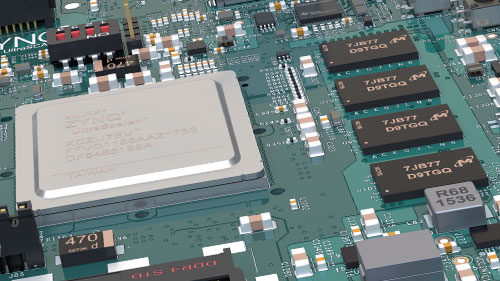
Advanced boundary-scan gives access to the hidden pins beneath BGAs and densely populated boards, where traditional test methods can’t reach. It allows engineers to run comprehensive interconnect tests without needing extra test points, probing, or X-ray inspection.
The system can test a wide range of devices, from CPUs, FPGAs, RAM, flash and ADCs/DACs to I/O expanders, clock buffers, and bus interfaces like I²C, SPI and PCIe. There is an extensive device library and automated setup made it easy to deploy in their existing environment.
The Result
- Fault isolation reduced from dozens of hours to under one hour
- Debugging done by a single operator, not multiple engineers
- Problems caught before final product assembly
- Substantial savings in engineering time and rework costs
As their hardware lead explained how advance boundary scan “saves hours of troubleshooting by pinpointing the faulty component causing the failure.”
The Insight
Integrating boundary-scan doesn’t just enhance test coverage, it transforms your entire workflow. Instead of chasing failures reactively, engineers can test intelligently and prevent them from reaching production.
If you’re still relying solely on functional tests, it might be time to add the precision of advanced boundary-scan to your toolkit.
See more real-world examples of how teams cut testing time and costs using advanced boundary scan. View how this advanced manufacturer turned it around here.
Or explore more success stories – see over 100 case studies here.
Is it time to try advanced boundary-scan for free with your own board and see how fast you can pinpoint faults that functional testing misses.
Related Reading