What Happens When You Start Testing Earlier
 Simon Payne, CEO, XJTAG
|
Subscribe to LinkedIn newsletter

Over the past few months, we’ve been talking about the importance of proving hardware early during bring-up.
Not just debugging when something goes wrong, but establishing confidence in the system before problems have a chance to grow.
Recently, we saw a very clear example of what happens when that approach is applied consistently.
The Starting Point
An engineering team working on complex electronic assemblies wanted to improve their test process.
Their goals were straightforward:
- Reduce test development time
- Improve fault diagnosis
- Maintain high coverage and reliability
- Scale across multiple product lines
Nothing unusual there, these are challenges many teams face.
The Traditional Problem
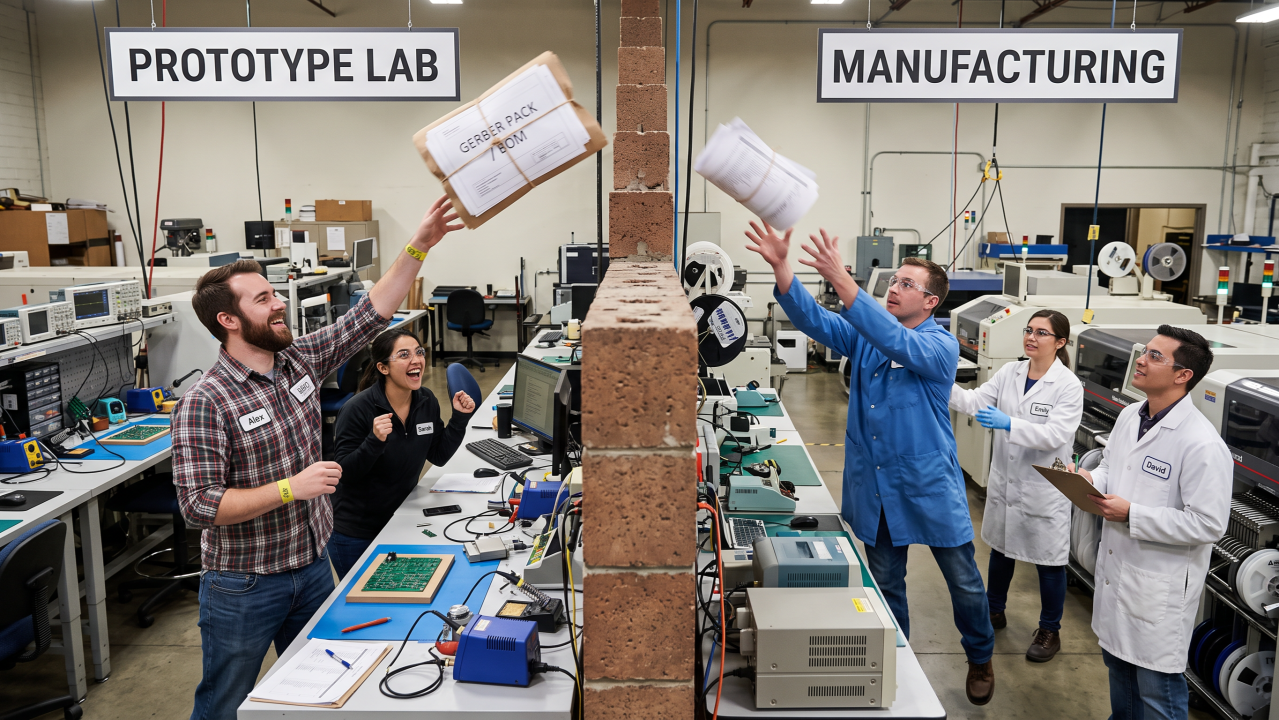
In many environments, testing and debugging happen relatively late in the process.
- Boards are assembled
- Firmware is developed
- Functional testing begins
And only then do issues fully surface. At that stage, diagnosing faults can be slow and expensive.
A Different Approach
Instead, this team shifted testing earlier in the lifecycle.
They introduced structural testing and programming:
- during early prototypes
- throughout development stages
- and across production
This meant that boards could be validated:
- as soon as they were assembled
- before full system behaviour was introduced
- and repeatedly as designs evolved
What Changed
The impact was significant.
Test development became much faster, with reusable libraries reducing creation time to around 40–60% of previous levels.
Fault diagnosis also improved dramatically.
Issues that previously took hours to identify could now be located in minutes and much earlier in the process, often immediately after assembly.
At the same time, integrating programming into the test process reduced overall production costs by 20–30% by removing the need for additional test fixtures.
What’s Really Happening Here
This isn’t just about faster tools or better automation, it’s about a change in approach.
Instead of waiting for problems to appear during functional testing, the team focused on proving the hardware earlier:
- confirming connectivity
- validating device access
- ensuring configuration paths were working
By doing that, they reduced uncertainty. And once that uncertainty was removed, everything else became easier:
- debugging became faster
- development cycles shortened
- production became more predictable
A Broader Pattern
This aligns closely with what we’ve been discussing over the past 12–13 weeks. The biggest gains in bring-up don’t always come from solving problems faster.
They often come from proving the right things earlier.
Closing Thought
In complex FPGA systems, problems are inevitable. But the point at which you discover them and how clearly you can isolate them makes all the difference.
Testing earlier, and across more stages of the lifecycle, doesn’t just improve quality, it fundamentally changes how quickly you can move forward.
Full Case Study
Related Reading