Faster FPGA Bring-Up Isn’t Just About Speed
 Simon Payne, CEO, XJTAG
|
Subscribe to LinkedIn newsletter

When engineers talk about accelerating FPGA development, the conversation often focuses on:
- faster tools
- faster programming
- faster debug
But in practice, the real gain often comes from something else entirely:
reducing uncertainty earlier
Two engineering examples highlighted this in very different ways.
Complex Boards Create a Different Kind of Problem
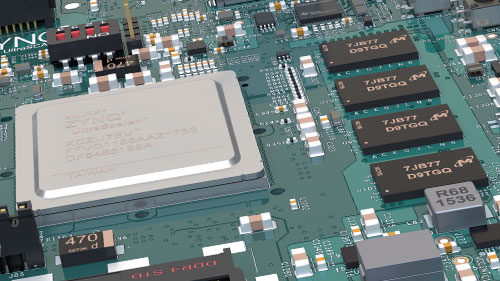
As FPGA-based systems become more sophisticated, so do the boards around them.
Modern designs increasingly include:
- BGAs
- high-speed interfaces
- mixed-signal devices
- serial buses
- tightly integrated subsystems
And while these systems deliver incredible capability, they also make testing and debugging significantly harder.
Not because engineers lack expertise but because understanding what’s happening on the board takes time.
One Team Focused on Coverage
In one example, an engineering team working with highly complex RF-related systems wanted to improve confidence in production testing.
Their boards contained:
- FPGA devices
- PCIe interfaces
- RS485
- RIO interfaces
- complex interconnected subsystems
By integrating boundary scan alongside existing functional testing, they achieved a considerable increase in overall test coverage
But interestingly, the biggest benefit wasn’t just coverage.
It was the ability to:
- create tests quickly
- reuse existing test structures
- debug failed boards more efficiently
- and investigate faults directly at pin level
The team also highlighted how intuitive tools and clear visibility into the JTAG chain simplified troubleshooting significantly
Another Team Focused on Test Time
A second engineering team faced a different challenge.
Testing their complex FPGA-based boards manually could take several hours per board.
Their systems included:
- FPGA devices
- memories
- DACs and ADCs
- LAN interfaces
- RS485
- I²C-connected devices
After changing approach, they reduced testing of critical sections to around 30 seconds.
But again, the real impact went beyond speed.
The engineers highlighted:
- easier fault detection
- better manufacturing quality control
- simpler debugging
- and the ability to detect faults that functional testing could easily miss
Importantly, they also recognised that testing could now move earlier into the manufacturing process before boards progressed into later calibration and system-level stages.
A Pattern Is Emerging
Across both examples, the same theme appears repeatedly:
The fastest engineering teams are often not the ones solving problems faster.
They are the ones:
proving more of the hardware earlier
Once engineers can:
- verify connectivity
- establish access
- confirm interfaces
- and isolate faults structurally
…the entire development and production flow changes.
The Importance of Visibility
One thing we’ve consistently observed over the years is this:
When engineers can clearly see:
- how devices connect
- where signals travel
- what has already been proven
…debugging becomes dramatically more efficient.
Because uncertainty reduces.
And when uncertainty reduces:
- investigation becomes more focused
- testing becomes more repeatable
- and confidence in the hardware increases much earlier.
Closing Thought
In complex FPGA systems, the biggest delays are not always caused by the faults themselves.
Often, they come from the time required to understand:
what the hardware is actually doing
The sooner that visibility is established, the sooner engineers can move from:
- investigation
- to understanding
- to confidence.
Full Case Studies
For more detail on the engineering examples discussed:
Explore your board design with the free XJTAG Layout Viewer
To get started find out how the free XJTAG Layout Viewer can help you see your board connections:
Related Reading